Tracking Seasonal Change in the Zanzibar Channel
Amini Omar is a PhD student at the Institute of Marine Sciences at the University of Dar es Salaam, studying the seasonal dynamics of plankton communities and water quality in the Zanzibar Channel. His research aims to address a gap in existing data by establishing a one-year baseline to track changes across the northeast and southeast monsoon seasons.
To build this baseline, Amini’s research uses two sampling approaches. A fixed station at Buyu is sampled every two weeks, while every three months, samples are collected at five stations across the Zanzibar Channel. The AML CTD is used to measure five key parameters: temperature, salinity, chlorophyll fluorescence, turbidity and dissolved oxygen. Water samples are also collected for nutrient analysis.
Together, these measurements will help Amini and his team examine how changing water conditions relate to plankton dynamics and, in turn, the productivity of small pelagic fish - an important resource for small-scale fishers in Zanzibar. His work also supports broader research related to fish larvae and commercial fisheries.
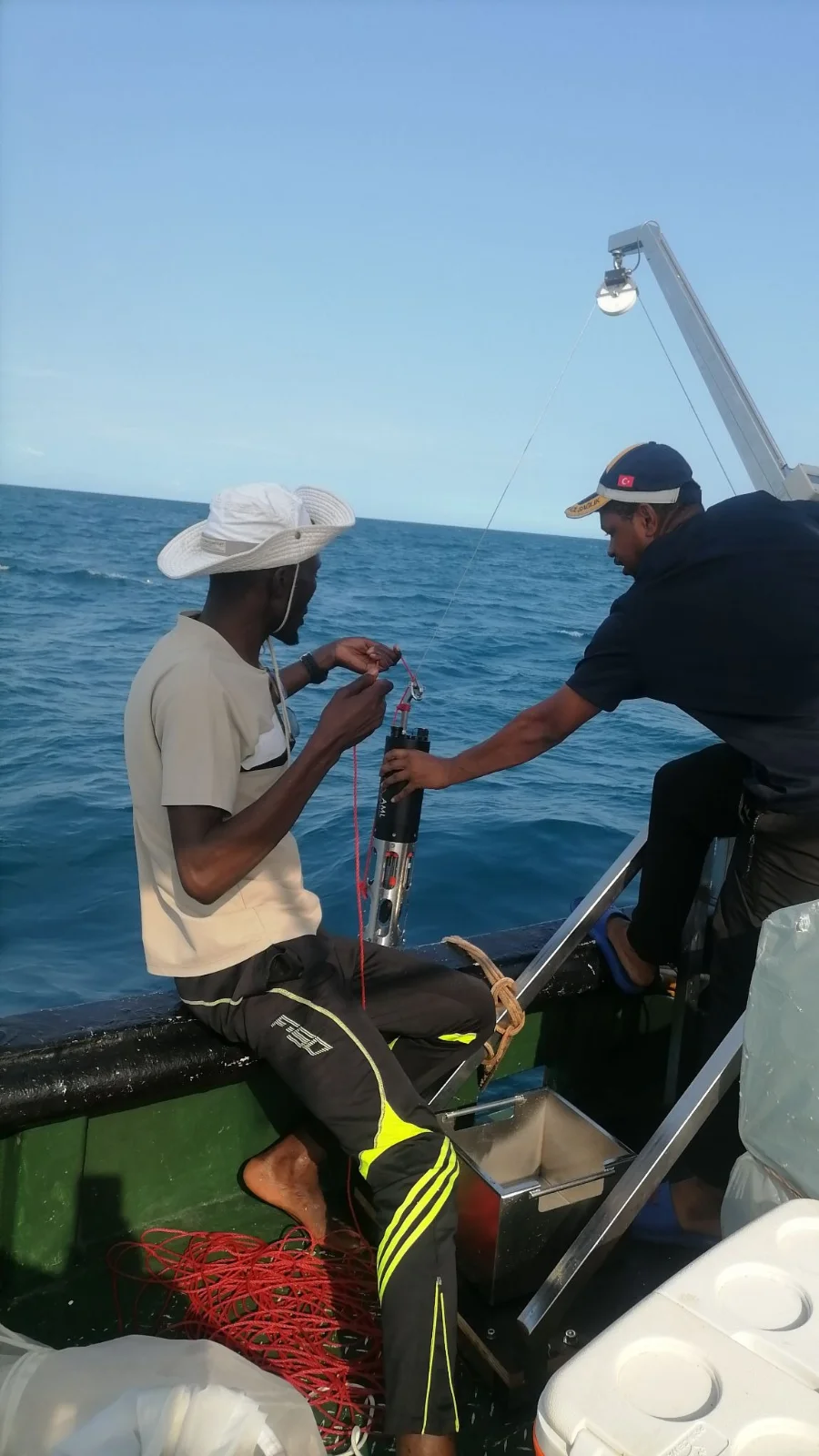
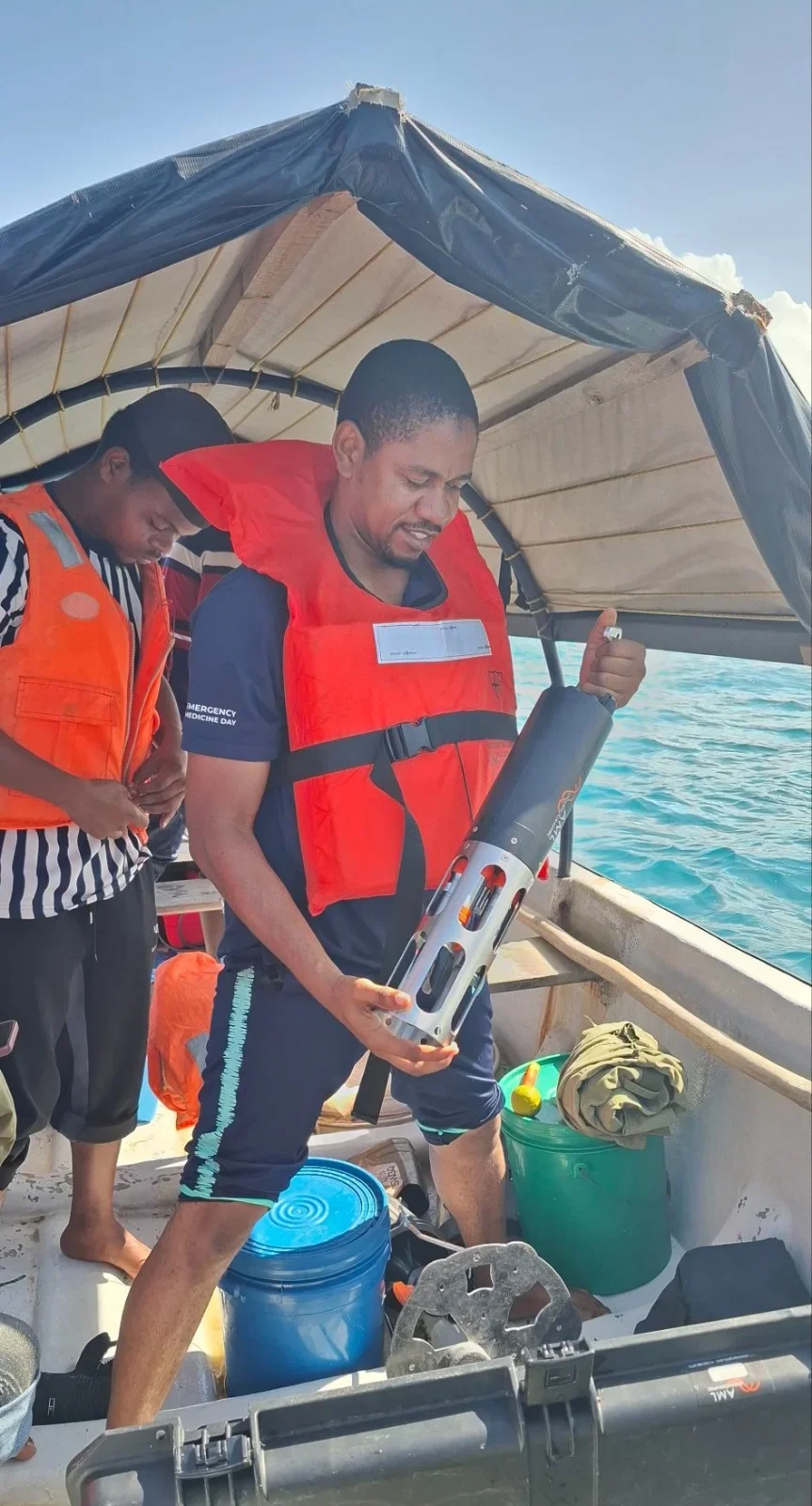
With a full year of measurements contributing to the baseline, confidence in the data is critical. Amini is confident in the results collected so far, with CTD measurements cross-referenced against laboratory chlorophyll analysis and historical data from the region.
Over time, this research could eventually contribute to government policy and fisheries management, helping inform decisions around seasonal fishing activities and sustainable fishing regulations. It could also help fishing communities anticipate periods of lower yields.
The CTD used in Amini’s research was provided through the ECOFISH project, in collaboration with Danish partners at DTU Aqua. This Tanzanian-Danish research initiative is working to better understand the links between climate change, pollution, marine ecosystems and fisheries in Tanzania. With more than a quarter of the population depending on marine resources along Tanzania’s coast, the importance of sustainable fisheries and resilient coastal communities is difficult to overstate.
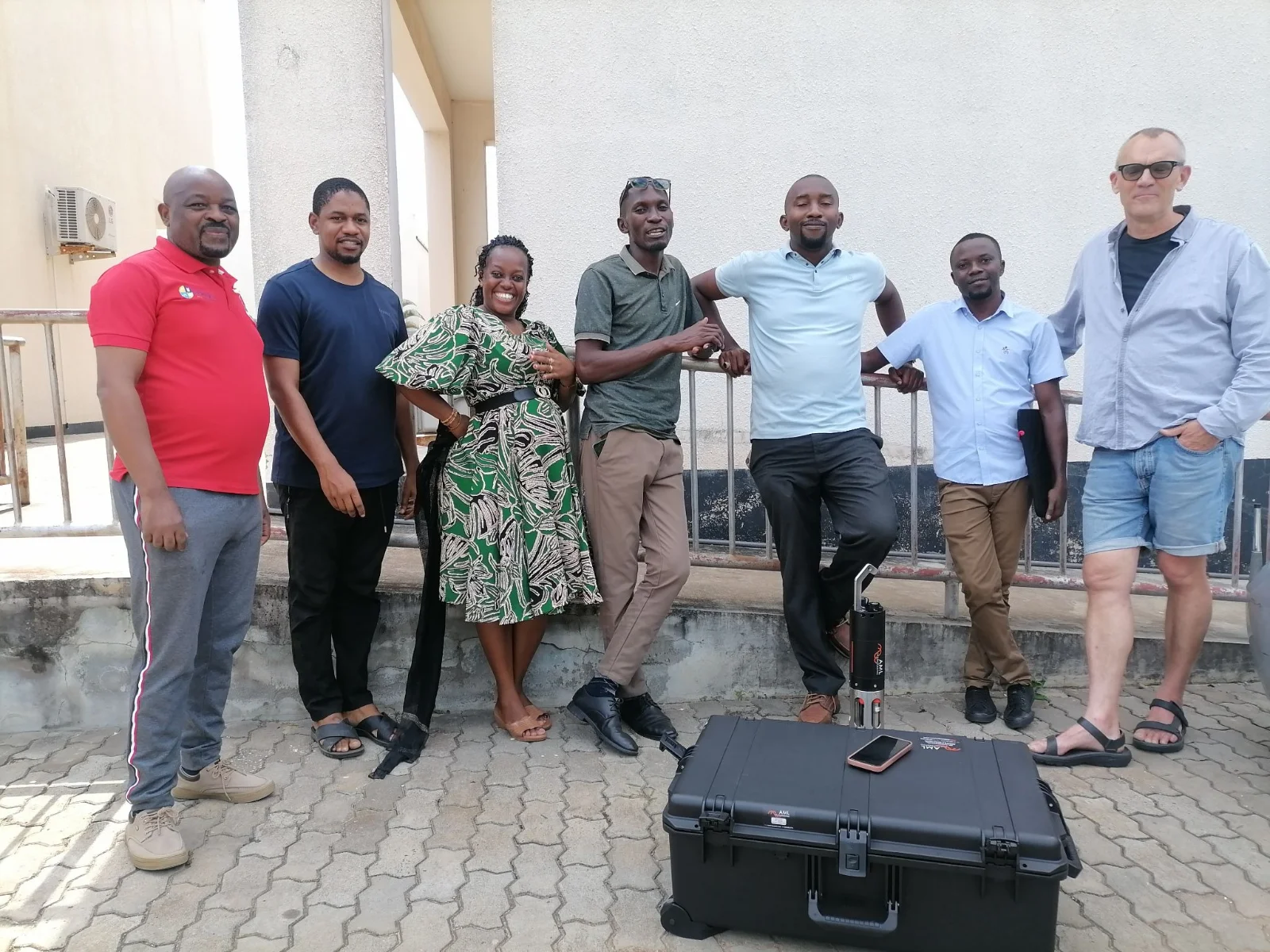
Beyond Amini’s own work, other students are also using the CTD to study fish reproduction seasonality, fish larvae diversity, fish larvae diet and feeding, and marine pollution from organic pollutants.


.jpg)


.png)


.png)


.png)


